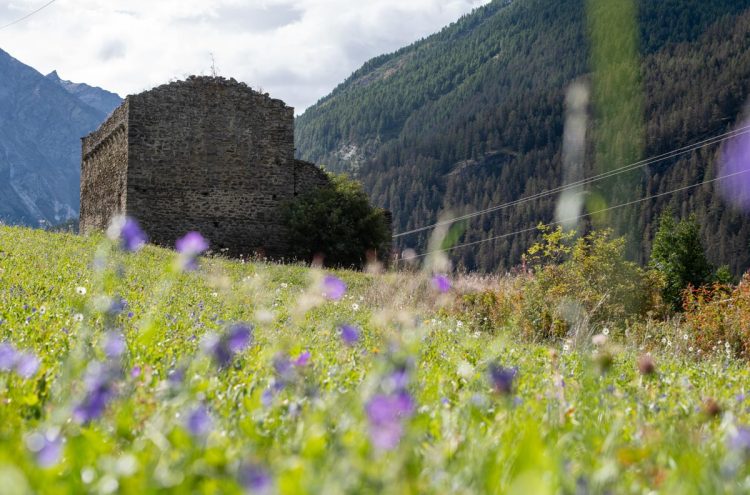
The Fortified House of Tarambel
Art in paradise


Virtual guides › Art in paradise

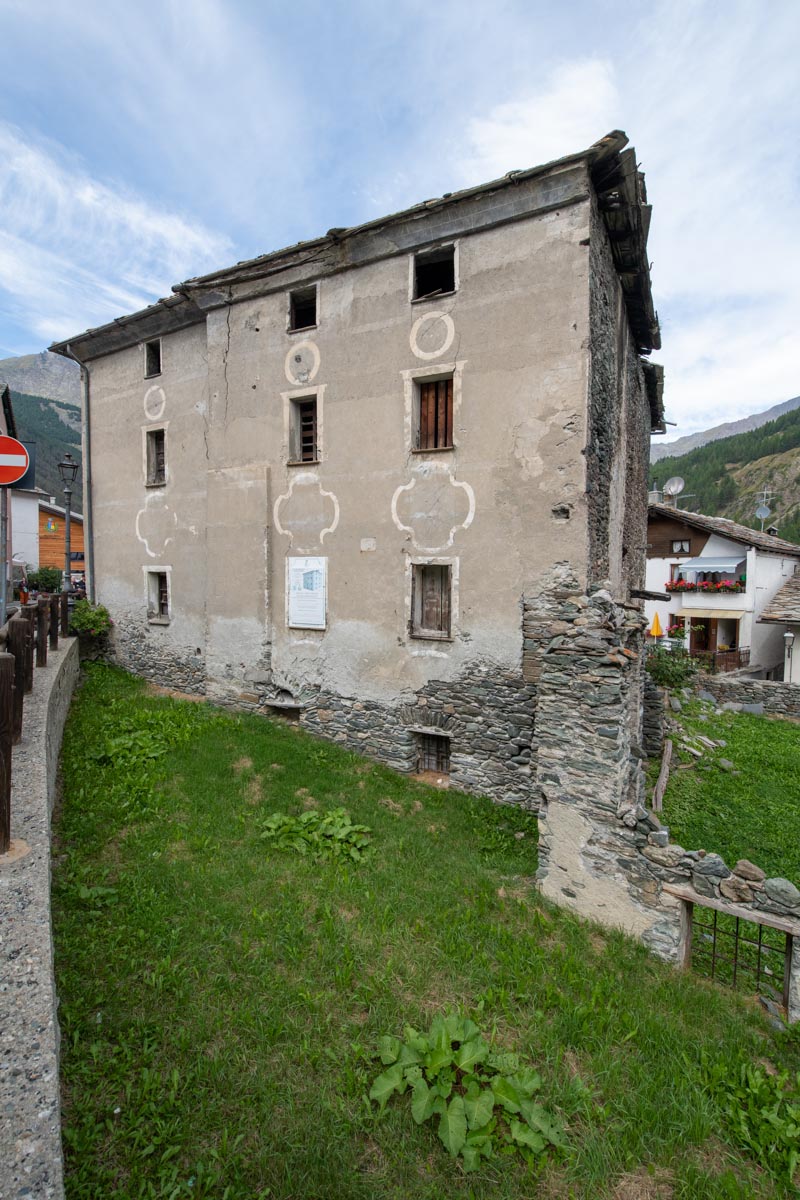
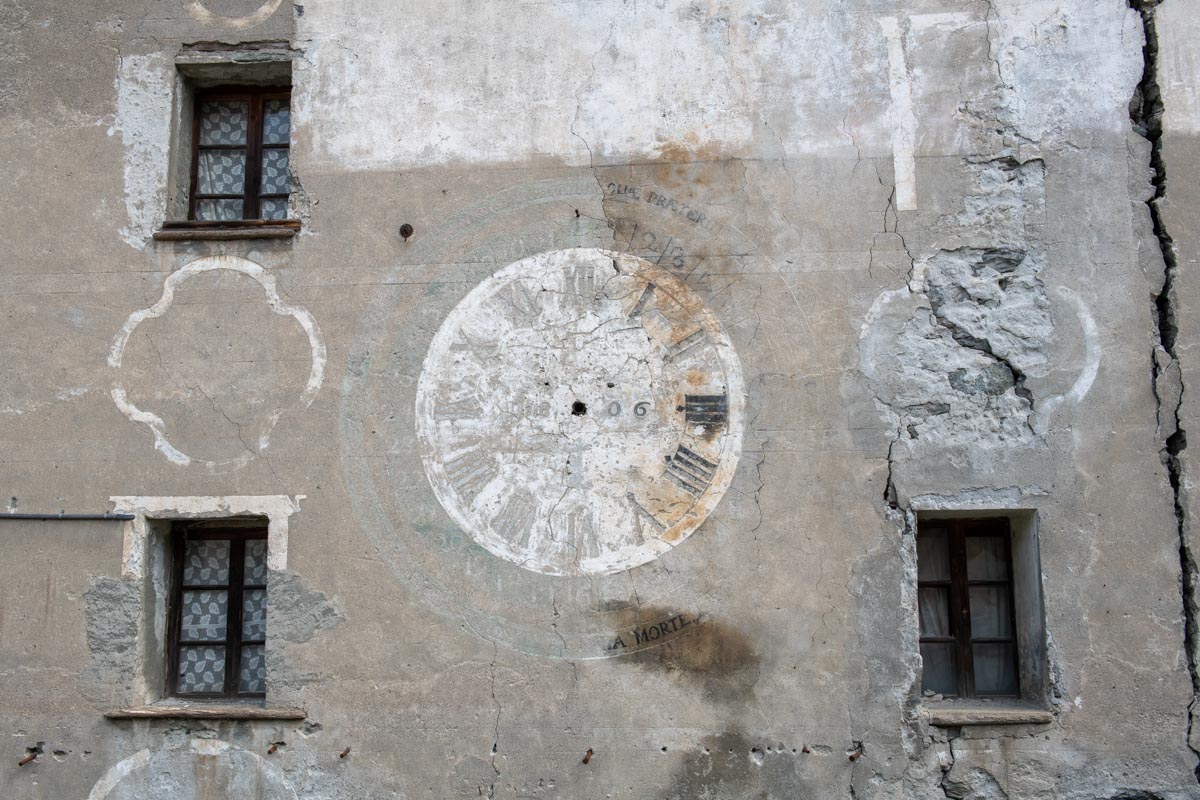
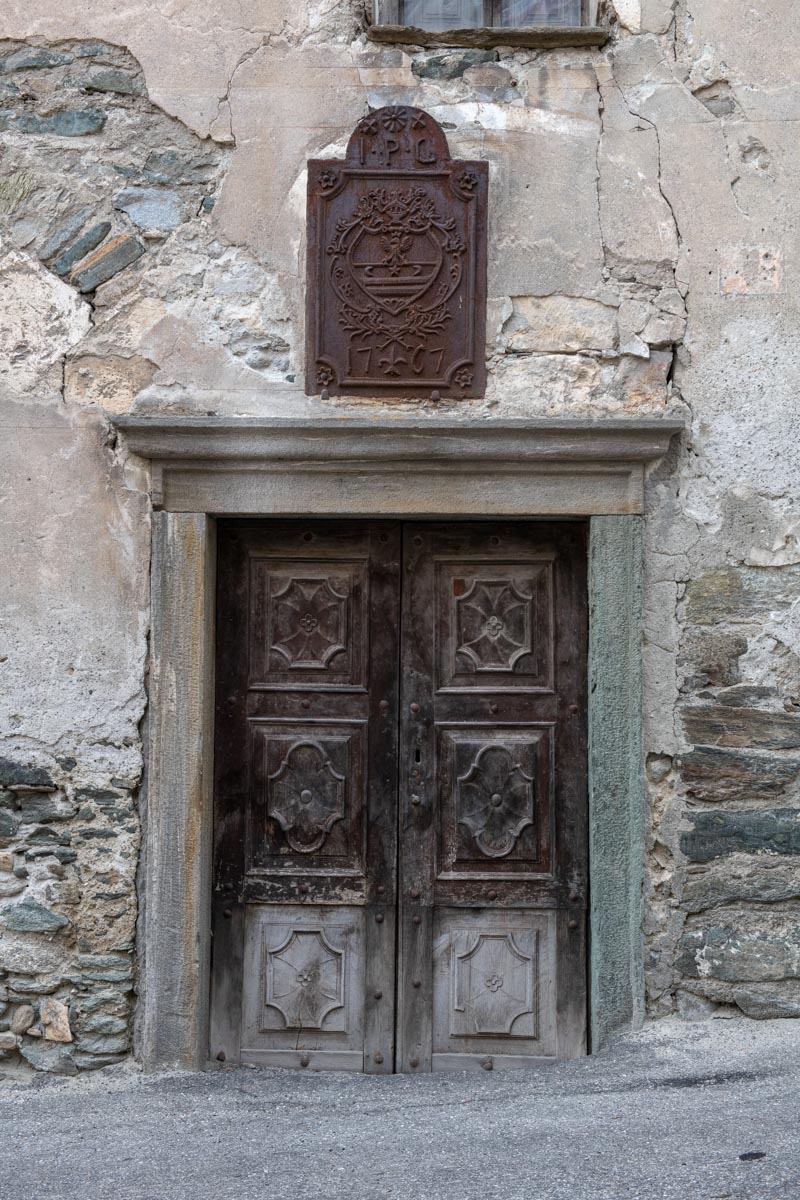
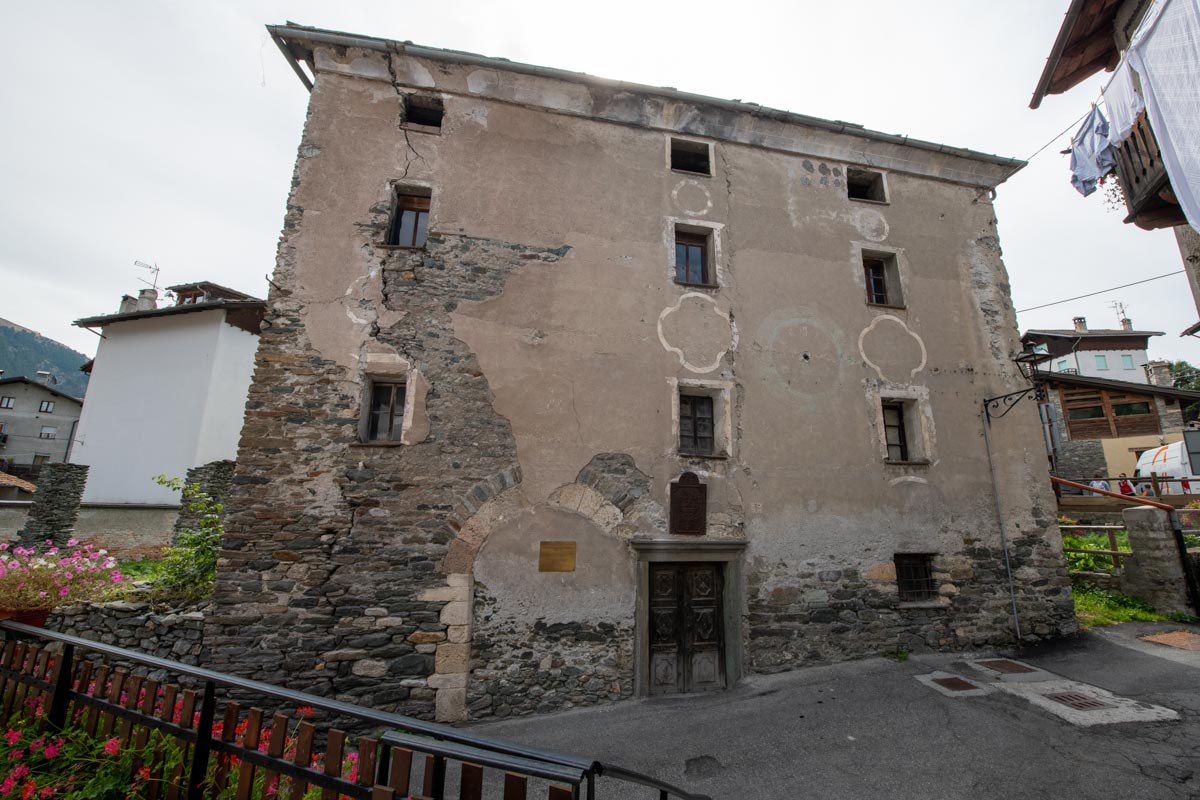
In 1767, the heart of Cogne was transformed by the construction of the Clock House, later inhabited by César-Emmanuel Grappein (1772-1855), a well-known doctor, mining director, and innovator. The house represents an important cultural and historical symbol for the community.
The center of Cogne in the 17th and 18th centuries housed several wealthy families. Jean-Pantaléon Grappein, César-Emmanuel's grandfather, bought these buildings, unifying them into a large building with a wooden portal and baroque decorations. The house underwent various renovations, culminating in the late 18th century with the addition of plaster and corner Greek frets. César-Emmanuel Grappein intervened on the house, further enriching it with facade clocks in 1806, after his return from his studies in Turin.
Although in poor condition, the northeastern clock, with the sentences "vide et vade" and "fugit irreparabile tempus," is accompanied by four symbolic birds, such as the peacock. On the other hand, the southwestern clock still shows the hours and days of the month, with inscriptions that recall the flow of time taken from Ovid's works. The clock mechanism, dating back to around 1805-1806, included wooden and metal elements with cage sprockets and pin-pallet escapement. Such a public clock was of paramount importance for the entire local community. The presence of the clocks, in fact, would have put a stop to the heated disputes that could occur during the irrigation of the fields, regulated precisely by a marked use according to specific schedules.
Photo gallery
Video,
The Clock House