Il centro espositivo del Parco Minerario e della miniera di Cogne
Art in paradise

Virtual guides › Art in paradise

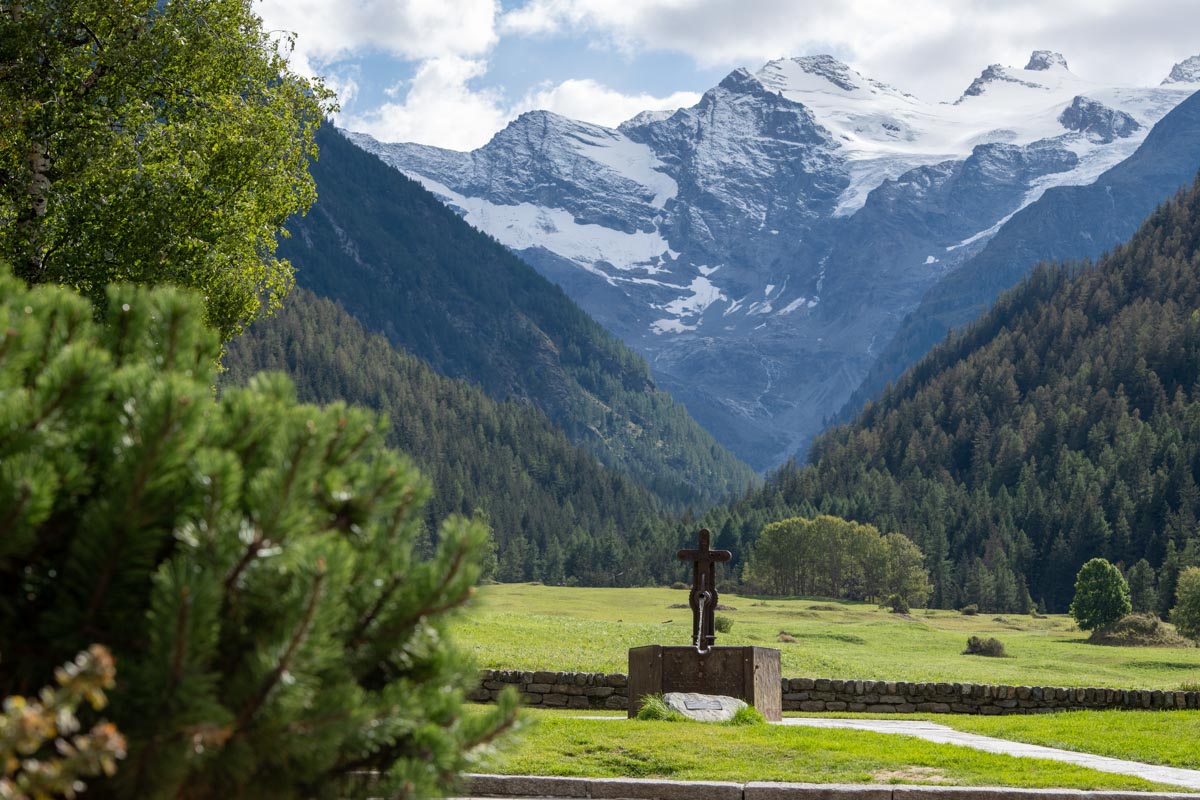
This work, shaped with iron from the Cogne mine, was built between 1809 and 1816 by Dr. César-Emmanuel Grappein, director of the magnetite mines. It is currently located on the edge of the Sant'Orso Meadow, but it was originally located near the Clock House.
The locals commissioned the fountain due to the water depletion of the main spring. The new water collection and the construction of a fountain to replace the worn wooden one were necessary. The fountain symbolises the first decades of the 19th century in Cogne, marked by the resumption of magnetite extraction. The whole represents a practical and symbolic monument inspired by the ancient sacred fountains that fascinated Grappein.
The fountain has an irregular octagonal shape, with the inner walls housing the initials of the financiers and a large cross on the southern side. The cross, cast at the Chévril plant, has a face of Christ in the center.
On the external south side, a quote by Ovid, "cura quid expediat," flanked by the initials "GM" (Grappein Medico) underlines the importance of public responsibility. The representation of an ibis or phoenix indicates the awakening of the mine. On the north side, a warning to the townspeople not to abandon agriculture for the mine mentions Virgil ("O fortunatos nimium, sua si bona norint, agricolas"). Little owls and owls evoke ancient wisdom and Grappein's criticisms of his opponents' rapacity. The fountain was moved to its current location after World War II and restored in 2012.
Video,
Iron Fountain